
Analytical Testing
Analytical Testing
Experienced analytical researchers have a wide range of analytical experience and related knowledge.
Fast, reliable and accurate method development enables efficient process development and production.
Quality Assurance
Clean quality control and assurance
Prestige Biologics conducts environmental monitoring on a weekly to monthly basis, and manages the cleanliness of production facilities and test facilities at the world's highest level through identification and disinfection tests, and has a record of zero pollution / accident.
Prestige Biologics has experience in the development and production of new antibodies as well as biosimilars.
With the goal of providing high quality clinical and commercial product supplies to our customers and patients, we continuously improve our research and development, manufacturing and quality systems and processes to maintain the highest level of regulatory compliance.

Featured Test Methods and Equipment
| Sample Control | Best Test Capabilities | |
|---|---|---|
| Store each sample in an independent chamber |
Raw Materials > Manufacturing > DS / DP Release > Stability Test
|
|
Thorough storage and management of samples
|
Physical Chemistry Test |
|
| Biochemistry Test |
|
|
| Microbial Test |
|
|
| Environmental | and water monitoring | |
Regulatory
Regulatory Support
Fast and safe original drug production through Full Single-Use System
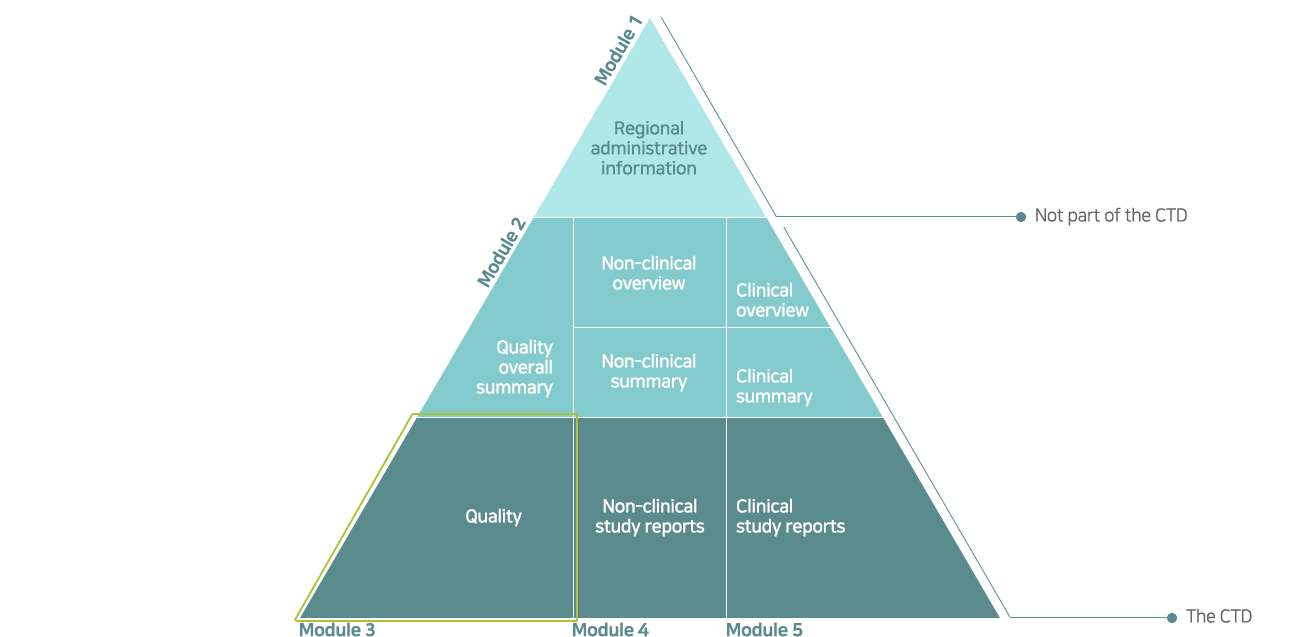
As a common international format for drug approval related to drug quality, it is documented and verified that R&D and manufacturing processes related to the quality of drugs (DS, DP) are consistently controlled and managed during the drug development process.
CTD Triangle
eCTD
| Module 1 | Administrative information and prescribing information |
| Module 2 | Common technical document summaries |
| Module 3 | Quality |
| Module 4 | Non-clinical study reports |
| Module 5 | Clinical study reports |