
ALITA Smart BioFactory™
We offer ALITA Smart BioFactory with Prestige Biologics’ own hybrid manufacturing technology. We provide customized global research/development, engineering, production, and regulatory support services.
Innovative Engineering Process Development
ALITA SMART BIOFACTORY™
ALITA Smart BioFactory™ is a future-oriented engineering model designed to deliver practical innovations that contribute to the biopharmaceutical industry by reimagining the way biopharmaceutical manufacturing is designed and operated.
To support the successful production and delivery of biopharmaceutical products, Prestige Biologics develops predictive engineering models and applies advanced manufacturing technologies to real-world production environments, continuously improving manufacturing performance from an engineering perspective
Through these efforts, Prestige Biologics maximizes manufacturing efficiency and operational reliability by leveraging automation and smart operational systems.
Feasible Innovation
Example of ALITA Smart BioFactory™'s Feasible Innovation
Expansion through efficient connection and flexible relocation of upstream and downstream processes
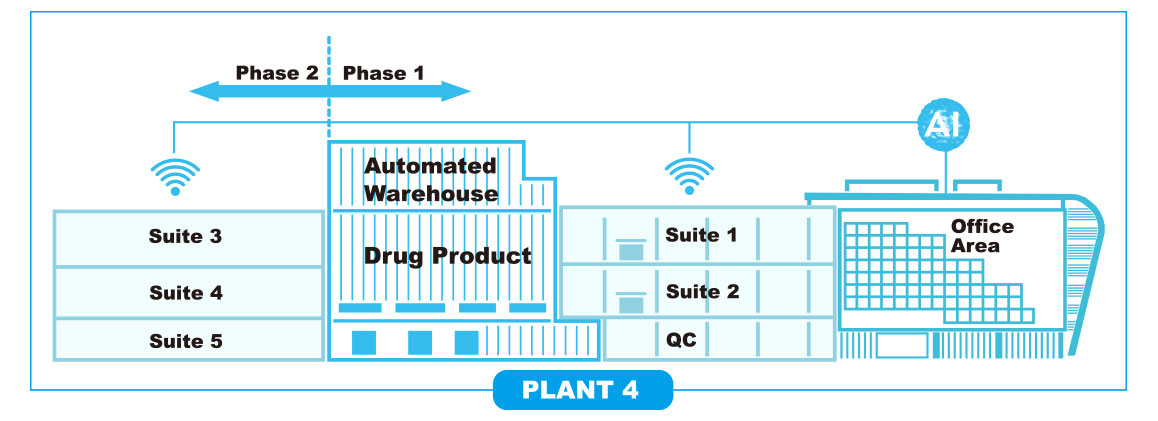
ALITA Smart BioFactory™ technology has been implemented at Plant 4 of Prestige Biologics. Designed based on a Hybrid System optimized for biopharmaceutical manufacturing objectives and process characteristics, Plant 4 represents the most advanced implementation of ALITA Smart BioFactory™ technology within Prestige Biologics.
The upstream process at Plant 4 utilizes Single-use Bioreactors, while the downstream process is configured with Stainless Steel Tanks, enabling a hybrid system that incorporates the advantages of both manufacturing approaches. As one of the core technology models within the ALITA Smart BioFactory™ platform, this hybrid system has been implemented to support the specific technical and manufacturing objectives of Plant 4's customers.
Through the application of nine patented technologies, including the Aseptic Connection System, to the engineering design of an actual biomanufacturing facility, Prestige Biologics has established an environment that enables strict control of key risks associated with cross-contamination and carryover throughout the manufacturing process.
Flexible UPS+DSP connection model to maximize equipment operation rate + minimize process changeover time and process time (picture below)
[Productivity Optimization Model]
Features of PLANT 4 : Hybrid Bio-factory
|
Location |
799 Jeongjung Ri, Osong, Cheong -Ju , Korea |
|
|
Site Area (Campus II) |
24,991.50 m2 |
|
|
Building Area |
8,179.44 m2 |
|
|
Floor Area |
24,790,31 m2 |
Phase 1 only |
|
Floors |
6 Floors |
|
|
Structure |
Steel Reinforced Concrete |
|
|
Main Capacity |
32,000L |
Phase 1 only |
|
Upstream/Downstream |
SUB + Hybrid/ Hybrid |
ALITA |
Plant 4, located at the second campus of Prestige Biologics, applies the ALITA Smart BioFactory™ as shown in the picture above.
① The basic connection method between Upstream Process (USP) and Downstream Process (DSP) (left side of the figure)
: The suites on the highest level are horizontally connected between the USP and DSP processes.
: Within the same floor, USP and DSP suites are aseptically connected in a horizontal configuration.
: DSP suites on each floor can be connected vertically, allowing DSP suites on upper floors to be flexibly connected to those on lower floors, enabling rapid expansion of DSP processing capacity and minimizing bottlenecks during transfer to downstream operations.
② An example of how to connect DSPs flexibly according to the USP level (right side of the figure)
: In the suite on the top floor, not only is the DSP horizontally connected to a single USP process, but additional connections can also be established with DSP suites on lower floors according to customer requirements. This highly flexible DSP scaling approach helps eliminate downstream processing bottlenecks.
: As shown in the figure, the Suite 2 level can be flexibly expanded with twice the DSP processing power by connecting USP2 to both DSP2 and DSP3.
Innovation for better productivity

Productivity
Enhanced productivity through maximizing equipment utilization and minimizing process changeover and processing times.
Innovation for better flexibility
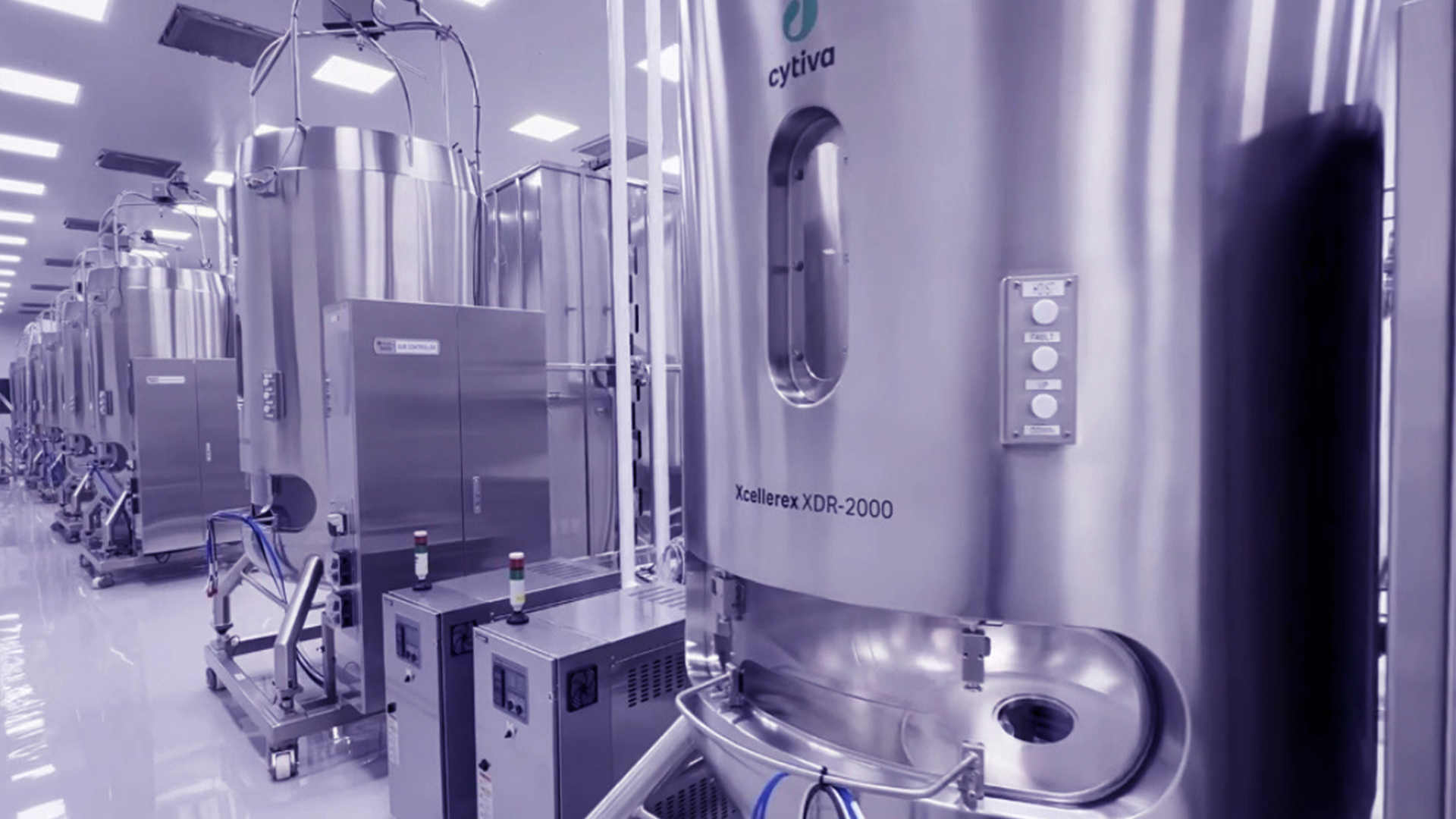
Flexibility
- Provides a flexible process design capable of accommodating complex customer process requirements.
- A manufacturing facility that enables flexible combinations of upstream and downstream processes.
Innovation for better effectiveness
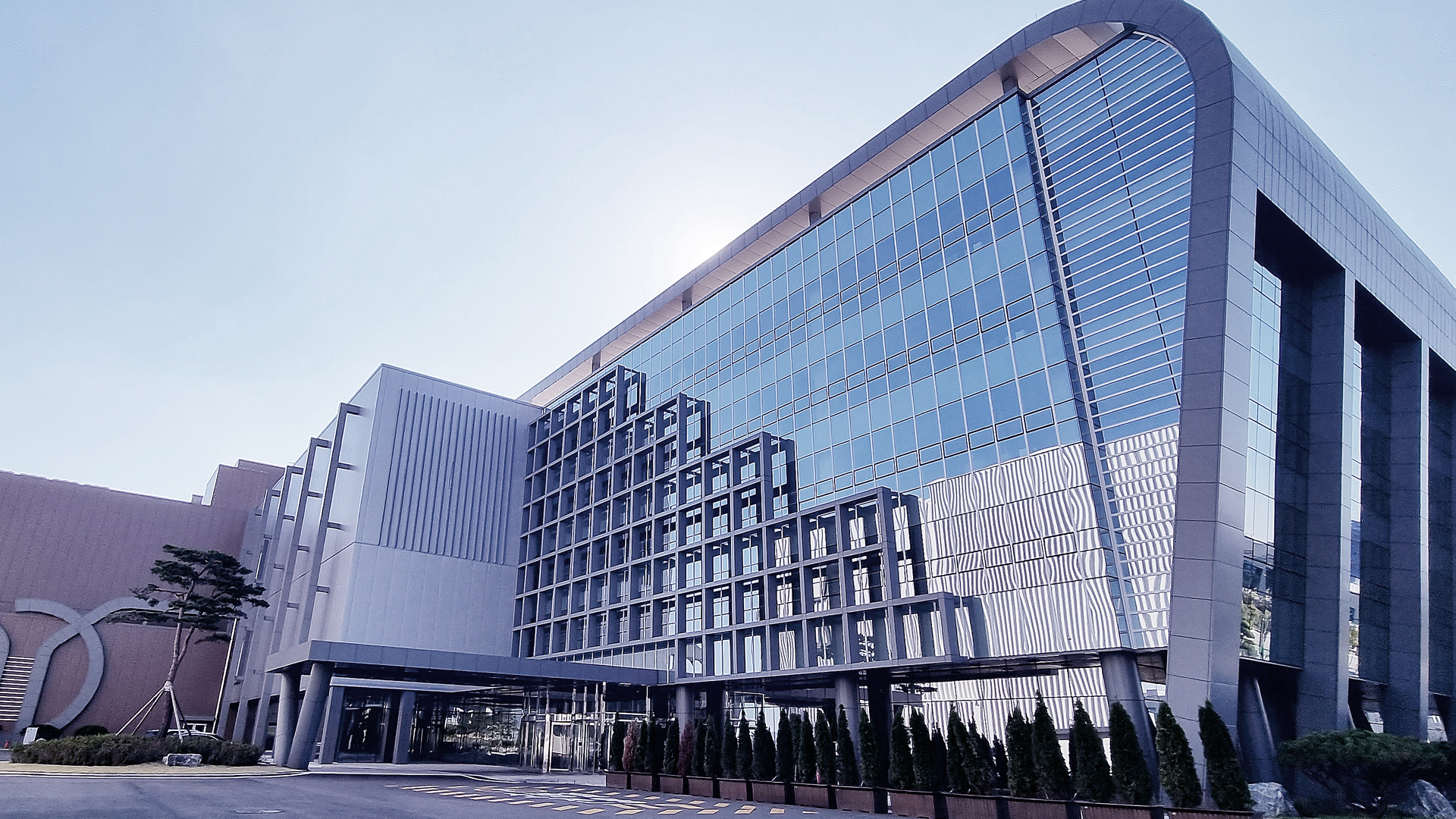
Effectiveness
An engineering design that can reduce consumable and operating costs compared to conventional single-use and stainless steel-based manufacturing facilities.
Hybrid System
Hybrid system through combined use of stainless steel and single use
(1) Core components: grouping core equipment for easy replacement
| Upstream | Downstream |
|---|---|
| Single-use bioreactor |
|
(2) Body components: Maximize transfer efficiency to the next process by installing around core equipment
| Upstream & Downstream | |
|---|---|
Patents
Upstream patented technology
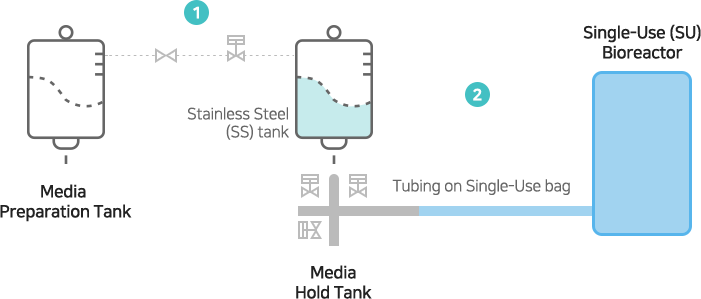
[Patent Content]
In-Situ Automatic Filter: Wetting, SIP, Integrity Tester include
Aseptic Connection: Aseptic connection between stainless steel and disposable tubing
Patents
Downstream patent technology
Component-based buffer preparation system using programmable logic controller (PLC)
An engineering model that efficiently limits the number of buffers used in the downstream process and reduces process productivity and worker labor with an automatic supply system using PLC.
① Reduction of processing time and labor
② Minimize the use of buffer preparation tanks
③ CIP cost reduction
Downstream Patent Technology table guide to the Downstream Patent Technology
